
Categories
Buy a HomePublished August 6, 2026
Buying a Home in Charlotte: The Game Plan We Use With Every Client


Most people start their home search backward. They open Zillow, save a few listings, and start touring houses before they've decided what they're actually solving for. Then three months in, they're exhausted, confused about what they can afford, and second-guessing every decision.
We've walked hundreds of South Charlotte buyers through this process, and the ones who feel calm and confident the whole way through all have one thing in common: they built a plan before they looked at a single house.
Here's that plan, broken into the four stages every purchase actually moves through.
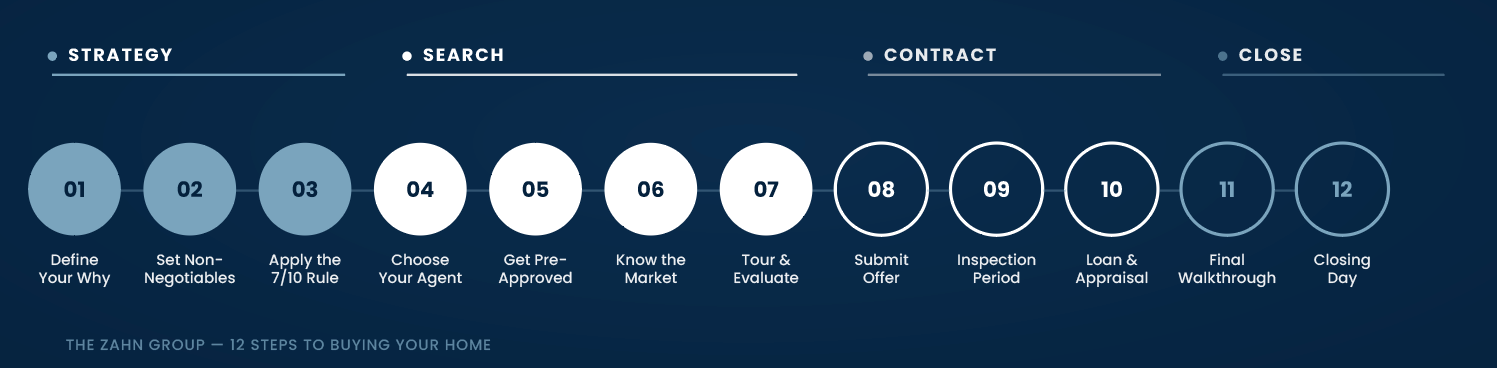
Stage One: Strategy
This is the part people skip, and it's the part that matters most.
Know your why. Most moves come down to a life change: a growing family, a marriage or divorce, downsizing after the kids leave, a job relocation, a death in the family. Whatever it is, naming it clearly gives you a filter for every decision that follows. A move driven by "we need more space before the baby comes" looks different from one driven by "we're ready to be closer to SouthPark and walk to dinner."
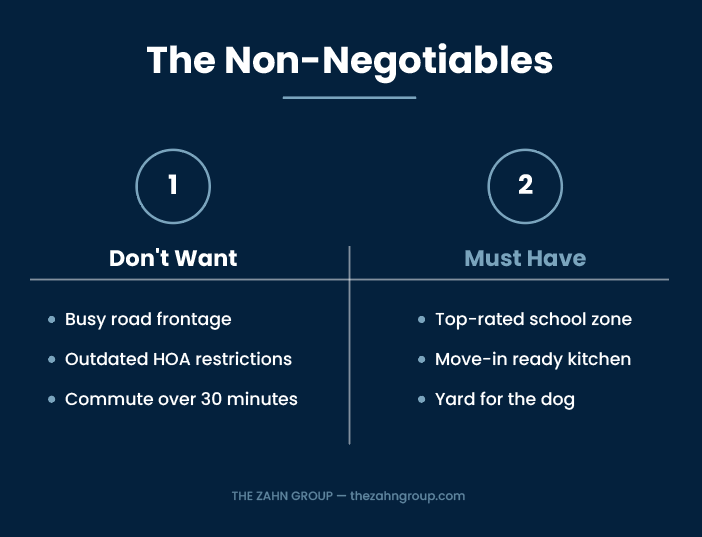
Get specific about your non-negotiables. Not the wish list, the actual line in the sand. Is it a school district? A commute under 25 minutes? A yard big enough for the dog? Write down three to five things you won't compromise on, and separate them from the nice-to-haves, things like a pool or a finished basement that would be great but aren't dealbreakers.
Use the 7/10 Rule. Here's something we tell every buyer up front: you are probably not getting a 10 out of 10 house in a 10 out of 10 location. In twenty years, we've seen it happen a handful of times. That's the 7/10 Rule: decide now whether you'd rather have a 10/10 house in a 7/10 location, or a 7/10 house in a 10/10 location. Buyers who answer this question before they tour anything move faster and second-guess themselves less.
Sort your timing. Some deadlines have zero flexibility, like the day your lease ends or your kids need to start at a new school. Others can wait, like when you finally get around to the new pool. Knowing which is which gives you real negotiating leverage later.
Settle the money question early. Two decisions matter here: are you thinking in terms of total purchase price or monthly payment, and are you paying cash or financing? Cash offers move faster and look stronger to a seller because there's no lender risk in the mix. Financing preserves your liquidity but means getting pre-approved, which takes some coordination. Either path works. What doesn't work is figuring this out mid-search.
Stage Two: Search
Once your plan is set, you need the right agent and the right access.
A good agent should be able to answer three questions clearly:
-
What's your process for helping a buyer through this
-
What are the most common mistakes buyers are making in today's market
-
How exactly do commissions work and who pays them?
If any of those answers feel vague, keep looking.
Here's something most buyers don't realize: the home that's actually right for you might not have a sign in the yard yet. In many South Charlotte neighborhoods, especially in tighter pockets like Montibello and Providence Plantation, a meaningful share of inventory never hits the open market. These are homes that would sell under the right conditions, the right price, the right timing, but aren't actively listed. A well-connected agent can surface these before they ever show up on a portal.
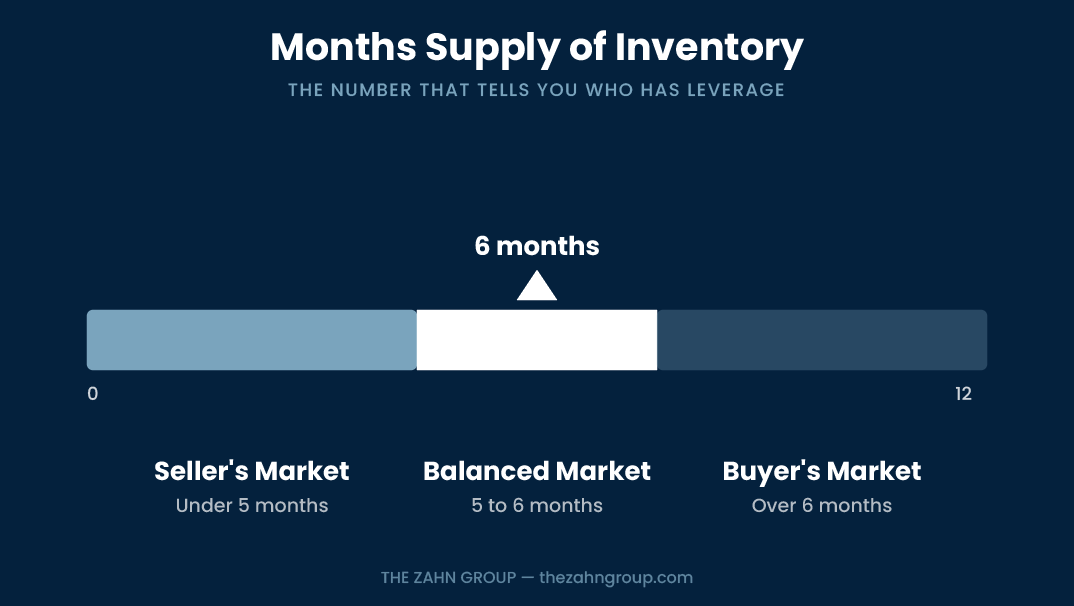
It also helps to understand the pulse of the market before you tour a single home. The number that matters most is months of supply, meaning how long it would take to sell every home currently on the market at the current pace of sales, assuming nothing new came up for sale. Under five months, sellers have the leverage. Over six, buyers do. That number tells you how a seller is likely pricing their home, and it should shape how you make an offer.
After every showing, ask three questions:
-
How is this seller likely pricing this home
-
Can you actually see yourself living here
-
What's the one change you'd make before making an offer.
That last question matters more than people think. A lot of buyers walk away from a genuinely good house over something cosmetic that a coat of paint that a weekend project would fix.
Stage Three: Contract
Once your offer is accepted, you're under contract, and this is where most first-time buyers get anxious. The good news: you're not locked in blind.
North Carolina doesn't use contingencies the way a lot of other states do. Here, it's a Due Diligence period. You pay a Due Diligence Fee, and in exchange, you get an agreed-upon window of time to do everything you'd normally handle under separate contingencies, all at once: the inspection, the appraisal, the loan approval. During that window, you can walk away for any of those reasons, or honestly, for no reason at all, and the only money you're out is the Due Diligence Fee.
That's the part we want every buyer to understand clearly before they sign: once the Due Diligence period ends, the terms change. If you walk away after that point, you forfeit both the Due Diligence Fee and your Earnest Money. So the window itself is your real protection. Use it. Get the inspection done early, stay on top of your lender, and don't let that deadline sneak up on you.
This stage moves fast and involves a lot of paperwork, which is exactly why having someone who's done this hundreds of times matters. We track your Due Diligence deadline like it's our own money on the line, because in a real sense, yours is.
Stage Four: Close
The final stretch has three parts: planning, verification, and the actual transfer.
In the weeks before closing, handle the logistics: your address change, utilities at the new place, and your moving timeline. In the final 48 hours, you'll do a final walkthrough to confirm the home is in the same condition it was when you made your offer and that any agreed-upon repairs actually got done. Then comes the closing table: documents signed, funds transferred, keys in your hand.
That last stretch is legally dense and moves quickly. It's where an experienced agent earns their keep, catching the details that would otherwise slip through.
—----
Buying a home in Charlotte doesn't have to feel like guesswork. It takes a plan, the right advocate, and someone who knows this market well enough to tell you the truth about what you're walking into. That's what we're here for.
If you're thinking about buying and want to build your game plan before you start looking, reach out. We'd rather spend an hour with you now than watch you make an avoidable mistake three months into your search.
Frequently Asked Questions (FAQ)
1. What are current average home prices in Charlotte? +
As of June 2026, the average sales price for a home in the City of Charlotte was $653,181, up 4.4% from June 2025. Median sales price came in at $440,000, up 1.1% year over year. These numbers move month to month, so if you're reading this more than a few weeks after publish, ask us for the current figure rather than relying on this one.
2. How do I get pre-approved for a mortgage in Charlotte? +
Pre-approval means a lender has reviewed your income, assets, and credit and confirmed what you're actually qualified to borrow, not just what you think you can afford. We recommend getting pre-approved before you tour a single home. It gives you a real number to search within, and it makes your offer stronger once you find the right house. We can connect you with a few local lenders so you can compare rates and find the right fit before you start.
3. What are the closing costs when buying a house in Charlotte? +
Closing costs typically run 2 to 4% of the purchase price and cover things like loan origination fees, title insurance, appraisal fees, and prepaid items like property taxes and homeowners insurance. The exact number depends on your loan type and the specifics of your purchase. We walk every buyer through their actual estimated closing costs well before closing day, so there's no surprise at the table.
4. What is the Due Diligence period in North Carolina? +
North Carolina doesn't use contingencies the way many other states do. Instead, buyers pay a Due Diligence Fee for an agreed-upon window of time to complete inspections, get an appraisal, and finalize loan approval. During that window, a buyer can walk away for any of those reasons, or for no reason at all, and only forfeits the Due Diligence Fee. Once that period ends, walking away means forfeiting both the Due Diligence Fee and the Earnest Money, so knowing that deadline matters.

Molly Zahn Harrison
Owner, Broker in Charge | The Zahn Group | Select Realty
or another way